Health and Safety Policy for Cleaners Deepcleaning
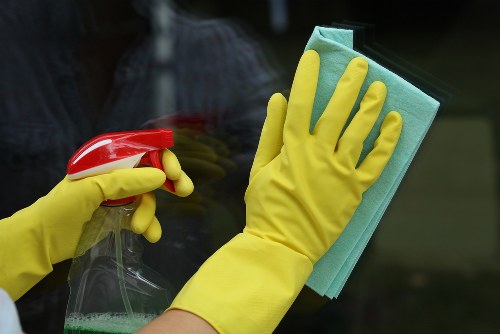 Cleaners Deepcleaning is committed to maintaining a safe, healthy, and well-managed working environment for all staff, clients, and anyone affected by our activities. This health and safety policy sets out the principles and practices that support safe deep cleaning services, reduce risk, and promote responsible working at every stage of a cleaning assignment. We recognise that deep cleaning often involves handling chemicals, working in busy premises, and carrying out physically demanding tasks, so a clear approach to safety is essential.
Our policy applies to all deep cleaning operatives, supervisors, and anyone acting on behalf of the company. Every person involved in our work is expected to follow safe systems, use appropriate equipment, and report concerns promptly. We believe that good cleaning standards and good safety standards go hand in hand. By keeping work areas organised and procedures consistent, cleaners deepcleaning teams can deliver reliable results while protecting health and wellbeing.
 This policy is reviewed regularly to ensure it remains effective, practical, and aligned with the nature of our work. The aim is not only to comply with general safety expectations, but also to create a positive safety culture where hazards are identified early and controlled properly. We want every member of the team to understand that safety is a shared responsibility and that everyone has a role in preventing accidents and ill health.
Our Safety Responsibilities
Management responsibilities include providing suitable equipment, safe working methods, training, and supervision. Managers and team leaders must make sure that risk assessments are carried out before work begins and that control measures are put in place. They are also responsible for ensuring cleaning staff have the information they need to work safely, especially when dealing with specialist areas such as kitchens, washrooms, stairwells, or environments with potentially hazardous residue.
Employees are expected to take reasonable care of themselves and others, follow instructions, and use equipment correctly. Deep cleaning operatives must wear the required personal protective equipment, maintain good hygiene, and avoid rushing tasks in a way that creates unnecessary risk. If a cleaner believes a task is unsafe, they must stop and raise the issue so it can be resolved before work continues.
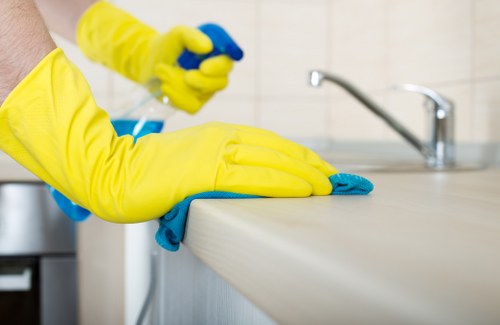 We also expect all staff to keep their workspace tidy, manage waste properly, and store tools and materials in designated areas. Clear floors, organised cords, and appropriate signage are simple but important measures that help reduce slips, trips, and falls. A well-run cleaners deepcleaning operation depends on attention to detail, not only in the cleaning itself but in the way the work is planned and carried out.
Managing Key Risks
The main hazards associated with deep cleaning may include exposure to cleaning chemicals, manual handling injuries, slips on wet surfaces, contact with contaminated materials, and strain from repetitive movements. To address these risks, we use suitable control measures such as correct dilution of products, labelled containers, careful lifting techniques, and the use of warning signs where floors are wet or being treated.
Chemical safety is a priority. Cleaning products must be used in accordance with manufacturer instructions and never mixed unless specifically approved. Staff should understand the purpose of each product, the hazards involved, and the correct method of use. Ventilation should be maintained where possible, especially when working in enclosed rooms or using stronger products for deep cleaning tasks. Gloves, eye protection, masks, or other PPE may be required depending on the job.
Manual handling is another important area. Deep cleaning can involve moving furniture, lifting equipment, carrying waste bags, or reaching into awkward spaces. Staff must assess loads before handling them and ask for assistance when necessary. Where possible, we use equipment that reduces physical strain and improves efficiency. Good technique, proper pacing, and regular breaks help reduce the risk of injury and support health and safety for cleaners deepcleaning work.
Training, Equipment, and Work Practices
Training and instruction are essential to safe performance. All staff receive relevant information about the tasks they are expected to carry out, including how to use equipment, how to handle cleaning materials, and what to do in the event of an incident. New starters are introduced to safety procedures before they begin work independently, and ongoing refresher support is provided where needed.
Equipment used for deep cleaning must be suitable, maintained in good condition, and checked before use. Damaged equipment must be removed from service immediately. This includes vacuum cleaners, mops, steam cleaners, floor machines, extension leads, and other tools that may be required on site. Using well-maintained equipment supports safer, more effective cleaning and reduces the chance of avoidable breakdowns.
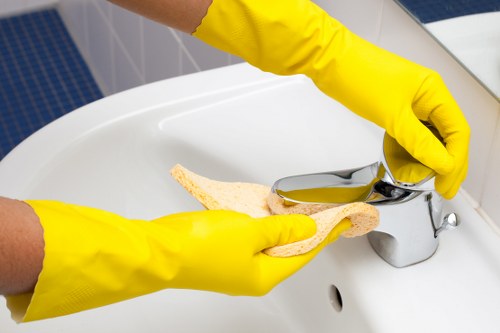
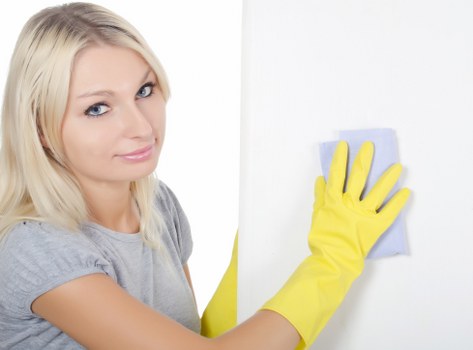 Personal protective equipment plays an important role in protecting staff from exposure and injury. Depending on the assignment, this may include gloves, aprons, masks, non-slip footwear, and eye protection. PPE must fit correctly and be used consistently. However, PPE is only one part of the control system and must always be supported by safe working practices, supervision, and proper planning.
Accident Reporting and Emergency Response
All accidents, near misses, hazards, and instances of ill health must be reported as soon as possible. Reporting allows us to investigate causes, learn from incidents, and prevent recurrence. When an event occurs, the area should be made safe, help should be provided if needed, and the matter should be escalated to the relevant supervisor. Accurate records support continuous improvement and reinforce accountability across the organisation.
Emergency arrangements are planned according to the nature of the site and the task being carried out. Staff must know the basic response to fire, chemical exposure, spills, cuts, and other urgent situations. In the event of a serious incident, work must stop and emergency procedures must be followed without delay. Cleaners should remain calm, follow site instructions, and ensure that any immediate dangers are controlled where it is safe to do so.
 We also expect all staff to respect client premises, follow access arrangements, and protect the safety of building users during operations. Deep cleaning may take place in occupied or partially occupied spaces, so clear communication, careful timing, and visible warning controls are important. By maintaining professional standards and a strong safety mindset, Cleaners Deepcleaning can deliver dependable services while protecting everyone involved.
Review and Continuous Improvement
This policy is supported by regular review, staff input, and practical learning from day-to-day operations. We monitor procedures to make sure they remain effective and suitable for the work being undertaken. Any changes in equipment, materials, or working methods will be assessed so that safety arrangements remain current. Our approach is based on continuous improvement and a belief that safer work is better work.
Ultimately, this health and safety policy reflects our commitment to professionalism, care, and responsibility. Every cleaner, supervisor, and manager is expected to contribute to a safe environment by following the policy, speaking up when something is wrong, and treating safety as an essential part of service delivery. Through consistent standards and good teamwork, our cleaners deepcleaning service can meet high expectations without compromising wellbeing.